


Snow Tires or All-Season Tires: What Hamilton Drivers Should Know
Snow Tires or All-Seasons? What Hamilton Drivers Should Know Before Winter Hits
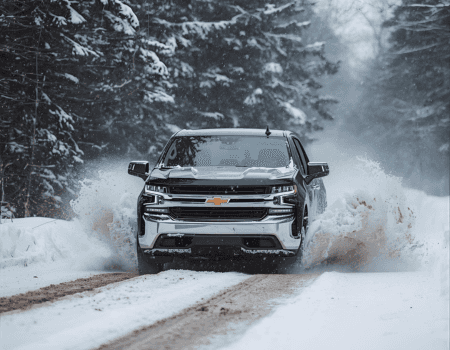 Hamilton weather is a mix of all four seasons before lunch. You can leave for work in flurries, hit puddles by noon, and slide home over black ice by dinner. Between the hills, backroads, and campus traffic, your tires deal with a lot of changing surfaces.
All-season tires are designed to handle a wide range of temperatures, but not extremes. Once the mercury drops below 45°F, the rubber in those tires hardens. When rubber stiffens, it can’t mold to the tiny irregularities in the pavement, which means less grip. Snow tires, made with a flexible rubber compound rich in silica, stay soft in the cold so they can keep holding onto the road instead of skating across it.
Why Temperature Matters
Rubber behaves a lot like a chocolate bar. Leave it in the sun and it’s pliable; put it in the freezer and it snaps. The same principle applies to tire compounds. Snow tires are engineered with polymers that resist hardening in cold air, which helps the tire maintain traction on icy or packed-snow surfaces.
All-season tires, by contrast, are optimized for longevity and fuel economy. Their harder compound works well on warm, dry pavement but becomes brittle when the temperature drops, reducing the tire’s ability to grip and lengthening braking distances.
The Tread That Does the Work
The design under your tires is just as important as the rubber itself.
-
Snow tires have deep grooves and thousands of small cuts called sipes that create extra biting edges. These edges break through the surface layer of ice and channel away melted water to prevent hydroplaning.
-
All-season tires have fewer sipes and shallower channels, which makes them quieter and smoother on dry pavement but far less effective when you’re driving through slush or light snow.
That difference becomes obvious in braking tests. On an icy surface at just 20 mph, cars equipped with snow tires can stop up to 30 or 40 percent sooner than the same car on all-seasons. That’s several car lengths of safety.
The Tradeoff: Grip vs. Longevity
Because snow tires are made of softer rubber, they wear faster in warm weather. That’s why they’re meant to be swapped seasonally. But here’s the hidden benefit: using two sets of tires means each one lasts longer overall. Your all-seasons get a six-month vacation every year while the snow tires do the heavy lifting in winter.
In short, snow tires are specialists. All-seasons are generalists. Specialists always win in extreme conditions.
The Hamilton Advantage
Hamilton’s mix of rural routes, campus hills, and unpredictable storms makes it the perfect test ground for winter tires. Snow tires give you the grip you need to stay steady on black ice, stop safely at intersections, and keep control when the slush piles up.
Visit Den Kelly Chevrolet to check your tread, compare tire options, or schedule your winter swap before the first big storm hits. A few minutes now can save you from a white-knuckle drive later.

0 comment(s) so far on Snow Tires or All-Season Tires: What Hamilton Drivers Should Know