


Is Your Car’s Antifreeze Ready for Winter?
A Guide to Your Vehicle’s Coolant Health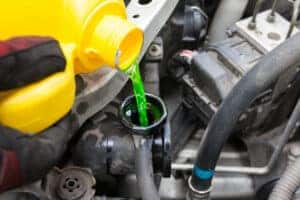
When your daily drive involves the rural routes and hills of Madison County, vehicle reliability is such a necessity. As we head toward the first hard freeze of the season, there is one fluid in your car that protects both your engine and your personal safety: your coolant, also known as antifreeze.
As you probably know coolant is the fluid that prevents your car engine from overheating in the summer, but its winter job is just as critical. It prevents the water in your engine from freezing, which could crack the engine block and lead to catastrophic damage.
What is this magical fluid? First of all, it’s not just one fluid. The liquid in your radiator is typically a 50/50 mixture of antifreeze concentrate (ethylene glycol) and distilled water. This specific ratio is critical for engine protection. Pure water freezes at 32 degrees and lacks the additives to prevent rust. Pure antifreeze (glycol) offers inadequate protection because, despite its name, it freezes at around 10 degrees, plus it’s poor at transferring heat. The 50/50 blend provides the ideal balance, using a scientific phenomenon called “freezing point depression” to offer superior freeze protection down to approximately -34 degrees while efficiently carrying heat away from the engine.
But that is not its only job. Over time, coolant can cause two major problems that every rural driver should avoid.
Risk 1: Engine Damage from Corrosion
Fresh coolant contains anti-corrosion additives. As this fluid ages, those additives break down. When that happens, the coolant can become acidic, allowing rust and scale to build up inside your radiator, water pump, and engine. This buildup causes clogs, reduces efficiency, and can lead to major overheating problems.
Not All Antifreeze is Created Equal
You’ve likely seen the different colors on the auto parts shelf: green, orange, pink, and yellow. These colors are not just for show; they indicate different chemical formulas.
- IAT (Inorganic Additive Technology): The traditional bright green coolant, found in older vehicles (pre-mid-1990s). It needs to be changed more frequently.
- OAT (Organic Acid Technology): Orange or red coolant, designed for long-life use in newer vehicles.
- HOAT (Hybrid OAT): A hybrid, often pink or yellow, that combines the two.
Using the wrong type for your car—or worse, mixing them—can have disastrous consequences. It can cause the coolant to “gel,” clogging your radiator and heater, and can rapidly accelerate corrosion. Always check your owner’s manual for the specific type your vehicle requires.
Risk 2: No Cabin Heat
This is a critical safety issue for rural drivers. Your car’s heater works by using the hot engine coolant to warm the air blowing into the cabin. If your coolant is very low or the system is clogged (perhaps from using the wrong type!), the first sign of a problem is often an interior heater that blows cold or lukewarm air. On a dark, 10-degree night, a lack of heat is a serious safety risk.
You can do a quick visual check yourself. Look for the plastic overflow reservoir under the hood. The fluid level should be between the “Full” and “Low” marks, and the color should be bright (typically green, pink, or orange), not a sludgy, rusty brown.
A visual check is good, but a professional test is better. At Den Kelly, our technicians can test the exact freeze protection point and the pH level of your coolant. Using professional tools like a refractometer to check the fluid’s concentration and test strips to measure acidity, we can see the full story. A coolant flush is a simple, inexpensive service that protects your engine and makes certain your heat will be there when you need it most.
If you’re not sure about the health of your car or truck’s coolant, get in touch with us for an appointment.

0 comment(s) so far on Is Your Car’s Antifreeze Ready for Winter?