


Is Your Car Suffering from “Short-Trip Syndrome”?
A Handy Guide for Village & Rural Drivers
Hopping in the car for a quick trip to the grocery store in Hamilton, NY, or just down the road to a neighbor’s house is a part of daily life. While convenient, these short drives can be some of the hardest on your vehicle. This common pattern of infrequent, short-distance driving can lead to a condition that our mechanics sometimes call “short-trip syndrome,” which can cause premature wear on some of the key components of your car, truck, or van.
Here are three ways these short trips to the corner can affect your vehicle’s health:
Your Battery Works Harder and Doesn’t Get What It Needs
In order to get your engine started you’re going to need a significant amount of power from the battery. This isn’t usually a problem because your vehicle’s alternator is designed to recharge the battery while you drive. Here’s the problem, a drive that lasts only five or ten minutes doesn’t give the alternator enough time to fully replenish all that power that was used to start the engine. Over time, this can slowly drain and weaken your battery, and, suddenly, your battery doesn’t have enough juice to turn the engine over.
Engine Oil Contamination Risks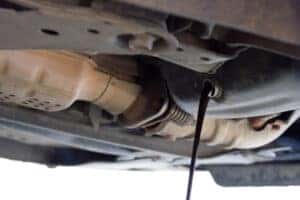
Your engine is designed to run at a specific operating temperature. It is at this optimal temperature that your engine oil can effectively burn off condensation and fuel contaminants. Driving just a few miles in the village prevents the engine from getting hot enough. This means that moisture now has a chance to mix with the oil. This can lead to sludge buildup, which can result in decreased engine performance including reduced power, poor acceleration, lower fuel economy, overheating issues, engine knock, and rough idling as moving parts experience increased friction and wear.
Exhaust System Rust Leads to Leaks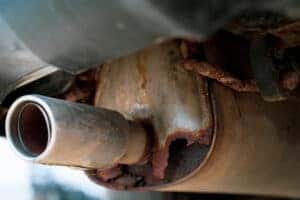
Condensation also builds up inside your car’s exhaust system. On a longer drive, the exhaust gets hot enough to evaporate this water. On short trips, the water sits inside the muffler and pipes, slowly causing them to rust from the inside out. This internal corrosion weakens the metal components and can lead to holes, exhaust leaks, and reduced system efficiency. This is why it’s not uncommon for a vehicle used only for short trips might need a new muffler sooner than one that is driven on the highway regularly.
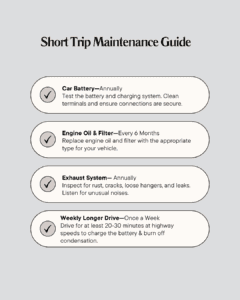
Keeping Your Vehicle Healthy
The best remedy is to plan on taking your vehicle out for a longer drive, about 20 minutes or more, at least once a week. Paired with a regular maintenance schedule, this can counteract the effects of short-trip syndrome. At Den Kelly Chevrolet, our technicians can perform a battery health test, inspect your oil, and spot issues like exhaust rust during our routine multi-point inspections. Here’s a schedule for you:

0 comment(s) so far on Is Your Car Suffering from “Short-Trip Syndrome”?